Why Cactive is building Force in Australia
Cactive is betting that Australian authorities want more control over the software they use to run day-to-day operations.
When asked why Cactive was building Force, chief executive Luke Matison pointed to Australia’s reliance on US defence technology. For Matison, the case for an Australian alternative starts with the authorities that buy and operate software here. He wants Force to fit their requirements across different levels of government, with the longer-term ambition of serving Western allies.
The customer Matison has in mind is an authority that needs to share information across teams while keeping control of who can see it. A council and a large department might have different budgets and support needs, but the people buying the software are likely to ask similar questions. Can it work with the systems they already have, and can their own staff administer it?
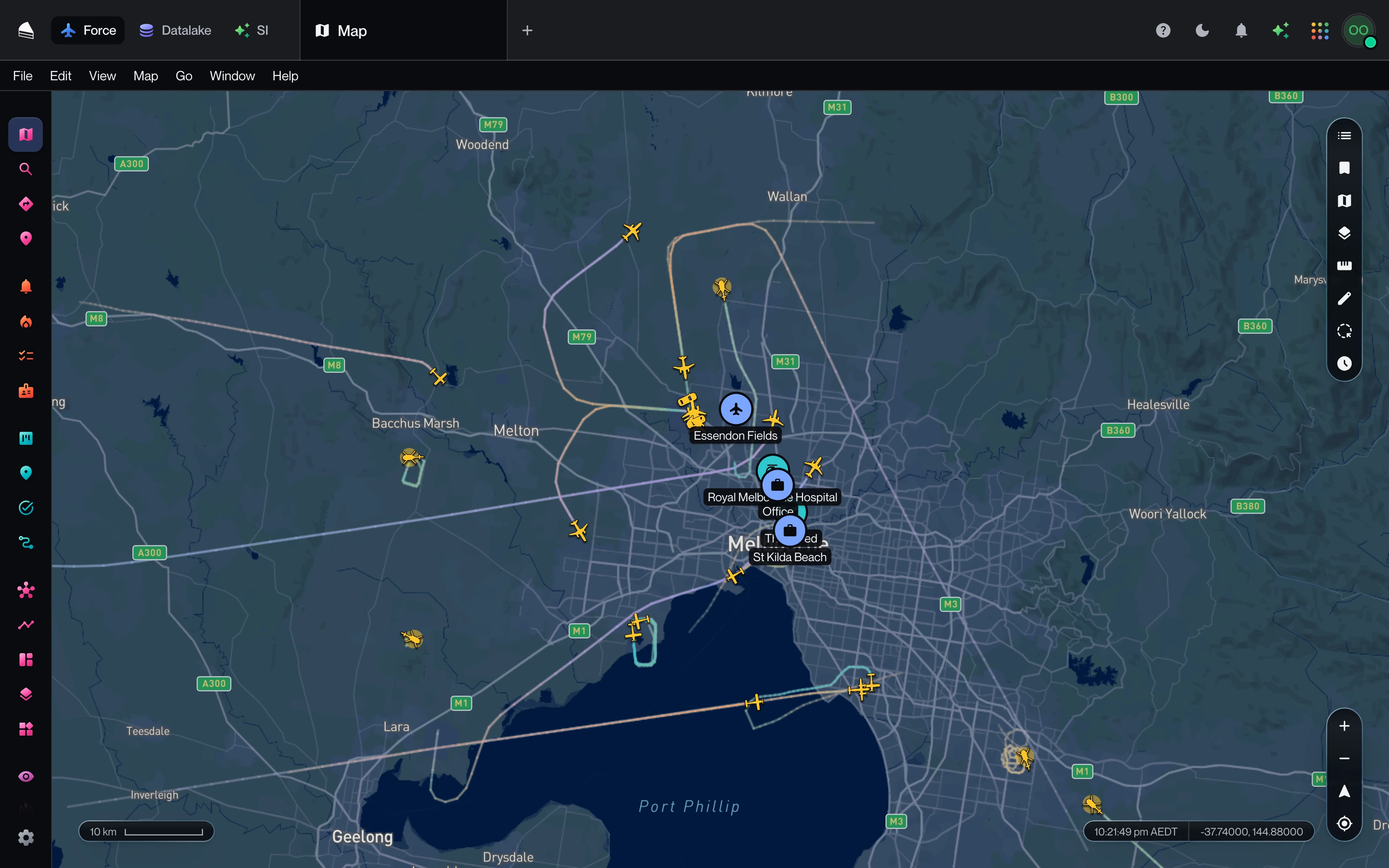
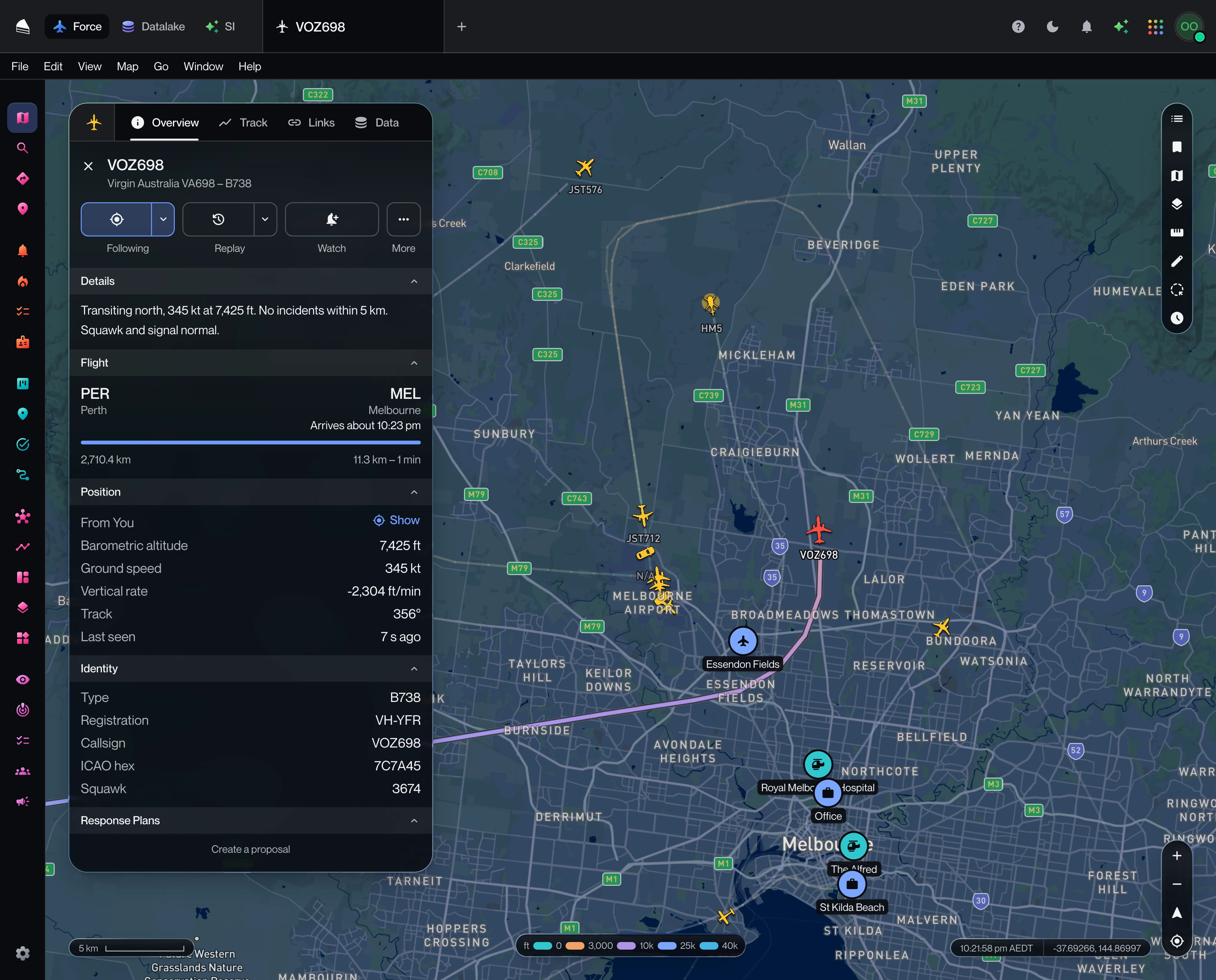
Cactive makes Force available to organisations on its Business plans with Maps. The software brings a map, search, alerts and case management together around an organisation’s records. Staff can work from the same underlying information while seeing the fields and records their roles allow.
Aircraft show how those views fit together. The map can display reported positions and tracks, while Search lets teams find a record and open it directly. In the demonstration below, the map shows aircraft around Melbourne. In a customer workspace, the same pattern can carry information from an organisation’s own records into a handover or follow-up.
An established supplier has an advantage before a feature comparison even begins. Staff know the current software, departments have already integrated it, and someone is responsible for supporting it. A buyer considering Force would need to see how it fits with the systems the authority intends to keep and what it takes to train people and migrate the information they need.
For a public-sector buyer, sovereignty becomes tangible when their own staff can decide who sees a record and how it moves between teams.
The company’s location is one part of the proposition. For the organisation paying for the software, the practical questions include who can administer it, where its data is handled, what support is available, and how the organisation could leave if its needs change. Those answers would need to hold up through implementation and day-to-day use.
A team evaluating Force could start with a handful of records and test how much time it takes to find a vehicle, hand a case to a colleague, or review who has access. A buyer can measure those results against the current process before working through hosting, support and other procurement requirements.
Matison’s ambition extends beyond Australia to other Western countries. An overseas authority can have a similar need to coordinate teams while imposing different requirements on how the product is installed, supported and governed. The opportunity is to distinguish what can be reused from what must be adapted for each market.
Force’s place in Cactive’s strategy is to give Australian organisations an option they can use alongside systems they already depend on. The case for taking that approach overseas starts with what a customer can do day to day: bring records into one view, control access and pass work between teams without losing the context.